When the market collapses: The true value of a consultant in a geopolitical crisis
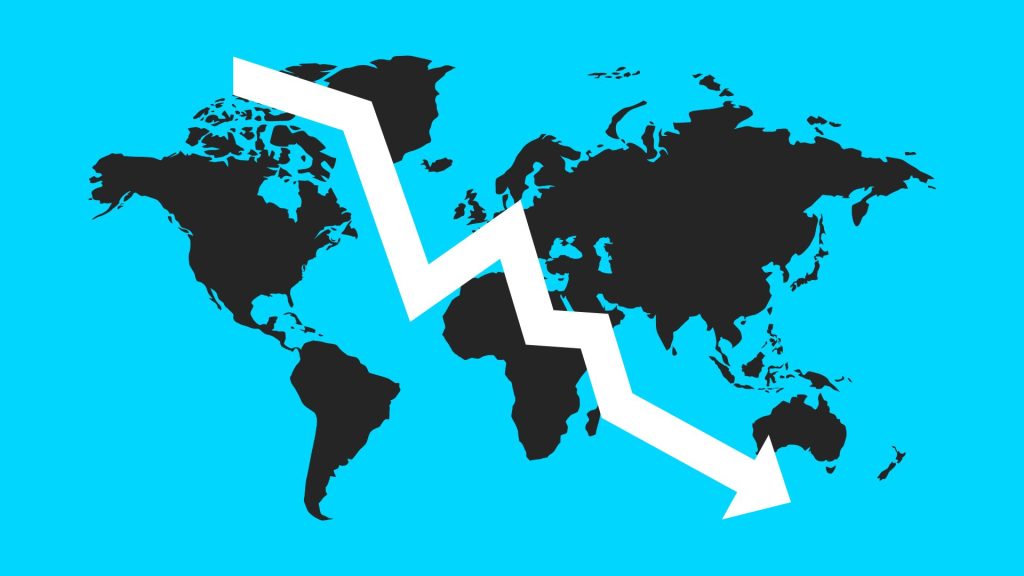
The geopolitical tensions we are currently experiencing are having a negative impact on global financial markets. Sovereign bond yields are skyrocketing, currencies are plummeting, and data sources are going offline overnight.
The question is clear: what happens behind the scenes when all this occurs?
And even more importantly: who ensures that decisions continue to be made based on reliable data?
Beyond the noise: when data is no longer stable
Under normal conditions, markets follow relatively predictable patterns. There are thresholds for variation that help determine whether a data point is accurate or needs to be reviewed. But in a complex geopolitical context, those limits become useless, and suddenly:
- Bond TIR surge past historic highs in a matter of minutes.
- Volatility spikes to levels not seen in recent memory.
- Stocks react with sharp, unpredictable movements.
This has an immediate effect: control systems trigger en masse, and this is where the real work begins.
Validating in the midst of chaos: ensuring data quality
One of the cornerstones of our work as consultants is data quality. When market conditions become strained, this ceases to be an automatic process and becomes a critical validation exercise. What changes in these scenarios?
- Thresholds are no longer a reliable benchmark.
- The volume of alerts grows exponentially.
- Response times are drastically reduced.
In this context, the value lies not in the system, but in the interpretation. It is not about detecting errors, but about distinguishing reality from anomalies. For example, during the energy crisis in Europe in 2022, many yield curves reflected extreme movements. The key was not to block that data, but to validate whether it reflected real market logic.
When sources fail: managing uncertainty
One of the least visible impacts of a geopolitical crisis is the failure of data providers. It may seem like a technical detail, but it isn’t.
During the conflict between Russia and Ukraine, several sources based in Russia stopped providing information or began doing so inconsistently, forcing us to act quickly:
- Identify contributors who are no longer reliable.
- Assess the quality of alternative data.
- Replace sources without compromising operational continuity.
The system’s resilience depends on the flexibility of the data model. This is where market knowledge makes all the difference. Not all sources are equal, and making the wrong choice can directly impact valuations and investment decisions.
The domino effect: when the input changes, everything changes
Market data is not an end in itself. It serves as the basis for numerous calculations. When that data changes abruptly, the impact is magnified. Some clear examples:
- Calculating covariances based on volatilities.
- Risk models that rely on historical correlations.
- Sensitivity metrics that inform investment decisions.
In a stable environment, these calculations follow predictable patterns, but in a crisis environment, they do not. A small change in the input can generate large deviations in the output. This requires reviewing not only the data itself but also the derived results.
Managing investments in unstable environments
At the same time, the impact isn’t limited to the data. It directly affects portfolios. In our work monitoring investments in the markets, geopolitical tensions have immediate effects.
1.Rising Risk Premiums
When a country or company is perceived as carrying greater risk, yields rise and bond prices fall; it’s not enough to simply observe this—we must verify that the movement makes market sense.
2. Volatility in interest rates and currencies
In international markets, risk is not limited to interest rates; it also involves currency risk. Sudden changes in rates affect expected returns, and movements in FX can amplify or reduce returns.
Risk becomes multidimensional. This requires analyzing portfolios from multiple perspectives simultaneously, not just from the underlying asset.
3. Increased trading activity
In times of stress, managers react. This translates into more buy and sell transactions, greater use of hedging, and an increase in derivatives in portfolios.
And all of this must be managed. More activity implies more operational risk. The consultant’s role here is to ensure that every transaction is properly recorded, validated, and aligned with the investment policy.
The real value
Under normal circumstances, many processes are automated, but when the environment becomes uncertain, automation is not enough—that’s where the consultant’s value comes in:
- Interpreting out-of-range data
- Making decisions with incomplete information
- Adapting controls in real time
- Ensuring operational continuity
Contextual knowledge becomes critical. It’s not just about knowing how a system works, but understanding how the market reacts to extreme events.
The real value
Extreme geopolitical situations don’t just affect markets; they put the entire ecosystem surrounding them to the test. In this context, the role of the consultant is evolving, shifting from executing processes to ensuring reliable decisions.
Because when data fails, models falter, and the market becomes unpredictable, there is one thing that makes all the difference: the ability to interpret, validate, and act with sound judgment.
At ARENA, our team delivers real value in these situations. We help our clients maintain the quality of their data, ensure the reliability of their calculations, and monitor their investments with confidence, even during the most critical moments.
Our market knowledge and adaptability enable investment decisions to be made with confidence, minimizing risks and maximizing opportunities.
That is the true value we provide, and it is precisely during the most complex times that it becomes most visible and, above all, necessary.